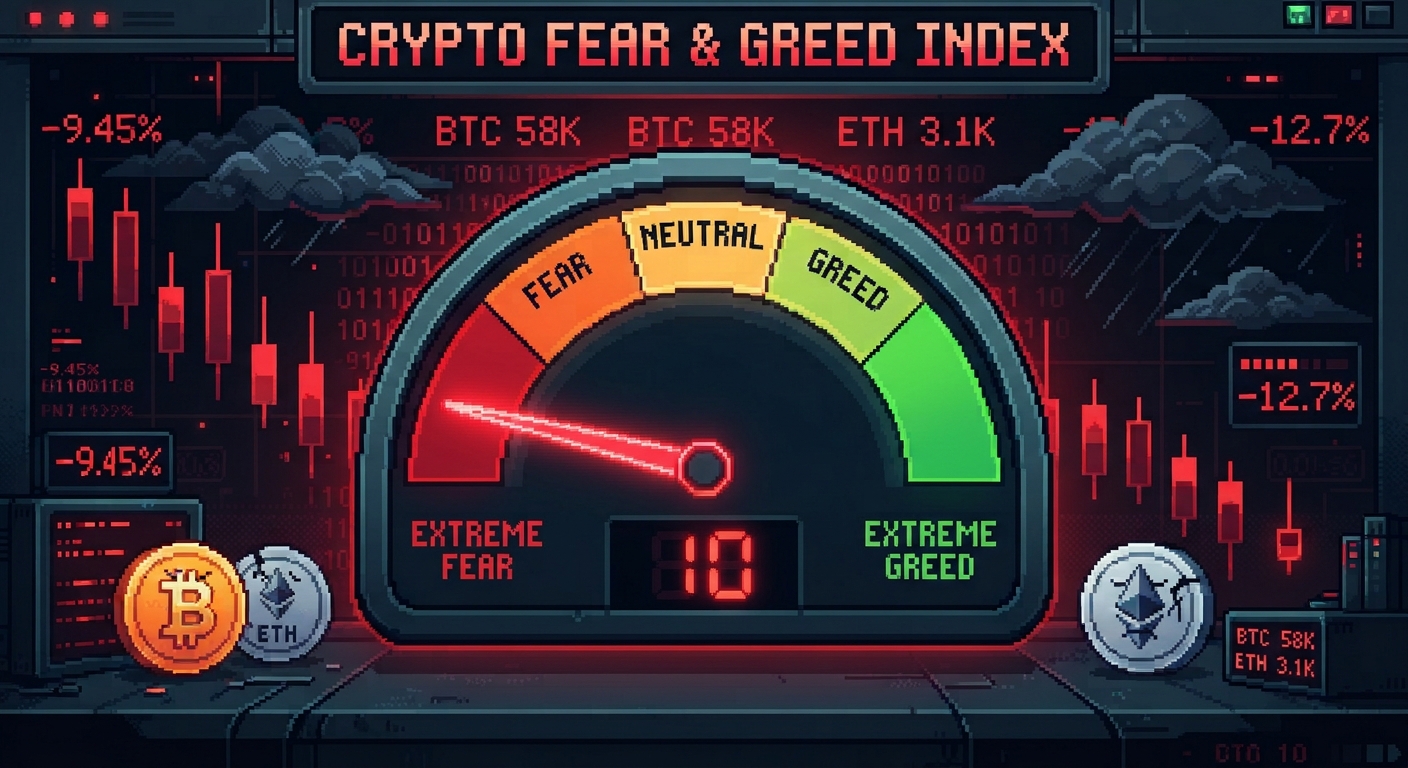

The main crypto sentiment gauge has fallen into Extreme Fear, reflecting sharp price drops and heavy risk aversion across the market. The Crypto Fear & Greed Index, which runs from 0 to 100, recently printed around 10, firmly inside the Extreme Fear band below 20. A month ago the same gauge was near 60 in Greed, and a week ago it was in the high 20s. The slide from 63 to 28 to 10 came as Bitcoin fell from recent highs and broke key long-term moving averages, according to a Decrypt market update.
Several outlets linked the swing to a weekly Bitcoin drop of roughly 14 to 15 percent from around 75,000 dollars to lows near 62,000 dollars. They also pointed to nearly 2 billion dollars of net outflows from US spot Bitcoin ETFs over seven sessions, along with broader macro worries about interest rates and risk assets. A Bitcoin.com summary noted that other gauges such as Coinglass also show extreme fear, a condition that has historically occurred only about 13 percent of the time. This suggests an unusually pessimistic mood across major crypto assets, not just a single coin wobble.
Historically, readings below 20 have often been cited by analysts such as Anthony Pompliano as areas where long-term buyers found attractive entries. He stresses, however, that such readings are not dependable calls of an exact bottom. Recent coverage notes past extreme fear episodes that led both to durable reversals and to temporary bounces during larger downtrends. Glassnode and other analysts also point out that current conditions include large clusters of leveraged long positions and shrinking stablecoin supply. That combination can turn extreme fear into forced selling rather than immediate recovery.
The sentiment signal alone is therefore bullish only if other factors begin to improve as well. Funding, positioning and macro conditions need to move in a more constructive direction before extreme fear can be treated as more than a potential opportunity zone. If leverage and liquidity look fragile, a low sentiment reading can remain low for longer or even precede further declines. This is why extreme fear is better understood as a warning and an opportunity at the same time, rather than as a stand-alone buy signal.
Three clusters of signals matter from here. First, price and levels matter, especially whether Bitcoin can hold above recent lows in the low 60,000 dollar area and reclaim key moving averages on the weekly chart. Second, flows and liquidity matter, including whether ETF outflows slow or reverse and whether stablecoin supply stabilizes instead of continuing to contract. Third, sentiment normalization matters, and a move in the Fear & Greed Index back toward the 20 to 40 range alongside reduced forced liquidations would suggest that panic is easing.
If sentiment starts to improve while price holds or recovers, it strengthens the case that the current extreme fear phase was a shakeout rather than the start of a deeper slide. If sentiment stays pinned in Extreme Fear while outflows continue and support levels fail, the market may be showing that the correction has more room to run. The balance between ETF flows, macro pressure and how quickly sentiment lifts from the Extreme Fear band will shape whether this episode becomes a longer-term opportunity or simply another step in a larger correction.